Historical Factory Record
Historical Supply Reference
This product has historical factory records. Recorded pack sizes and purity can be used as a supply reference, while project-specific availability is confirmed by inquiry.
- Pack sizes on record: 0.1g, 0.25g
- Available purity: >95%
- Inventory rows with stock: 0
- Bulk packaging: confirmed by inquiry
Reference Pack Sizes
Reference pack sizes are shown below. Final availability, packaging and delivery schedule are confirmed by inquiry.
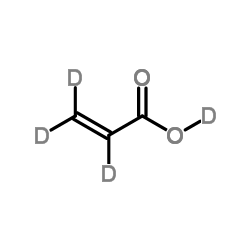
285138-82-1 / prop-2-enoic acid
Basic Information
CAS
285138-82-1
Multi CAS
Yes
Molecular Formula
C3H4O2
Molecular Weight
72.060000
Exact Mass
72.021129
InChI
InChI=1S/C3H4O2/c1-2-3(4)5/h2H,1H2,(H,4,5)
InChIKey
NIXOWILDQLNWCW-UHFFFAOYSA-N
Physical Properties
Melting Point
55 °F (NTP, 1992)
13.56 °C
13 °C
14 °C
55 °F
Boiling Point
286 °F at 760 mmHg (NTP, 1992)
142 °C
BP: 122.0 °C at 400 mm Hg; 103.3 °C at 200 mm Hg; 86.1 °C at 100 mm Hg; 66.2 °C at 40 mm Hg; 39.0 °C at 10 mm Hg; 27.3 °C at 5 mm Hg
141.20 °C. @ 760.00 mm Hg
141 °C
Density
1.0497 at 68 °F (USCG, 1999) - Denser than water; will sink
1.0511 g/cu cm at 20 °C
Liquid heat capacity: 0.460 BTU/lb-F at 106 °F; Saturated vapor density: 0.00106 lb/cu ft at 70 °F; Ideal gas heat capacity: 0.257 BTU/lb-F at 75 °F
Bulk density: 8.6 lb/gal at 20 °C
Relative density (water = 1): 1.05
Physical Description
Acrylic acid is a colorless liquid with a distinctive acrid odor. Flash point 130 °F. Boiling point 286 °F. Freezing point 53 °F. Corrosive to metals and tissue. Prolonged exposure to fire or heat can cause polymerization. If polymerization takes place in a closed container, violent rupture may occur. The inhibitor (usually hydroquinone) greatly reduces the tendency to polymerize.
Liquid
Colorless liquid or solid (below 55 degrees F) with a distinctive, acrid odor; Note: Shipped with an inhibitor (e.g., hydroquinone) since it readily polymerizes; [NIOSH]
COLOURLESS LIQUID WITH PUNGENT ODOUR.
Colorless liquid or solid (below 55 °F) with a distinctive, acrid odor.
Appearance
Acrid liquid
Liquid
Colorless liquid
Colorless liquid or solid (below 55 degrees F)
State
Liquid
Computed Properties
Structural Parameters
Heavy atom count
5
Rotatable bonds
1
H-bond acceptors
1
H-bond donors
1
Molar refractivity
17.83
TPSA
37.3
LogP / Solubility
WLOGP
0.26
MLOGP
0.21
XLogP3
0.3
Consensus LogP
0.26
Log S (ESOL)
-0.38
Class (ESOL)
Very soluble
Log S (Ali)
-0.34
Class (Ali)
Very soluble
Log S (SILICOS-IT)
-0.46
Class (SILICOS-IT)
Very soluble
ADME
GI absorption
High
BBB permeant
Yes
P-gp substrate
No
CYP1A2 inhibitor
No
CYP2C19 inhibitor
No
CYP2C9 inhibitor
No
CYP2D6 inhibitor
No
CYP3A4 inhibitor
No
Log Kp (skin permeation)
-2.98
Drug-likeness / Medicinal Chemistry
Lipinski
Yes
Ghose
No
Veber
Yes
Egan
Yes
Muegge
No
Bioavailability score
0.55
Brenk alerts
1
Leadlikeness
No
Synthetic Accessibility
1
Customers Also Viewed
-

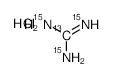
GUANIDINE-13C, 15N HCL
- CAS RN: 285977-73-3
- Product Code: starshine_CAS285977-73-3
- Purity/Analytical method: >99.0%
-
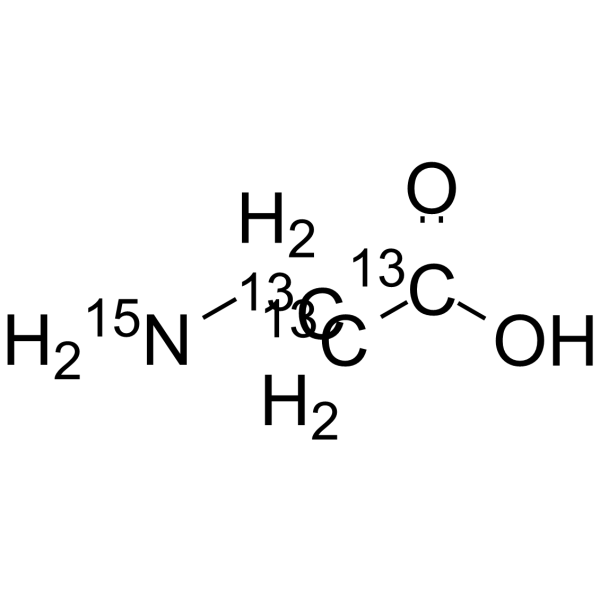
BETA-ALANINE-13C3-15N
- CAS RN: 285978-07-6
- Product Code: starshine_CAS285978-07-6
- Purity/Analytical method: >99.0%
-
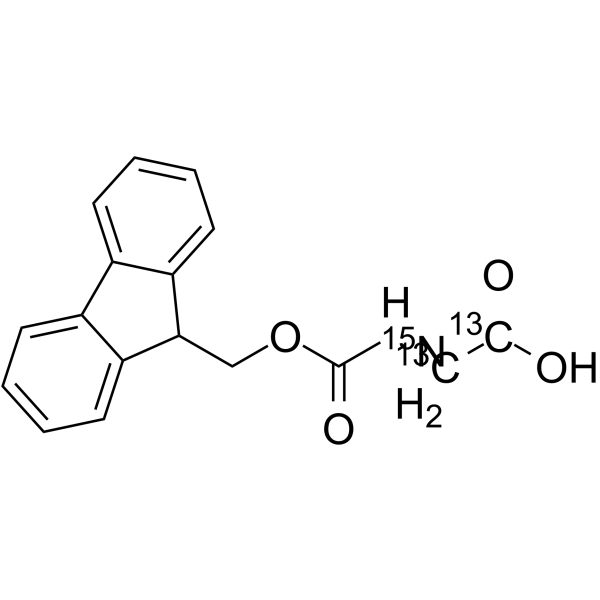
N-(9-FLUORENYLMETHOXYCARBONYL)GLYCINE-
- CAS RN: 285978-13-4
- Product Code: starshine_CAS285978-13-4
- Purity/Analytical method: >99.0%
-
-
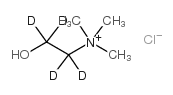
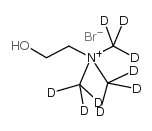
CHOLINE-D9 BROMIDE (N,N,N-TRIMETHYL-D9)
- CAS RN: 285979-71-7
- Product Code: starshine_CAS285979-71-7
- Purity/Analytical method: >99.0%
-
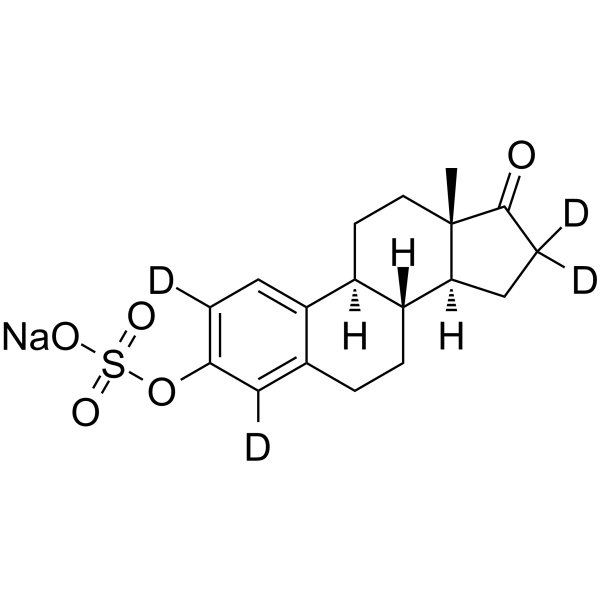
ESTRONE-2,4,16,16-D4 3-SULFATE
- CAS RN: 285979-80-8
- Product Code: starshine_CAS285979-80-8
- Purity/Analytical method: >99.0%