CAS RN: 81133-20-2
Soda asbestos, CP, 10-20 mesh
Product Availability
Choose a grade to view its available package options.
12 package records12 with current stock4 grade groups
| Batch No. | Package | Availability | Warehouse | Lead Time | Inquiry |
|---|---|---|---|---|---|
| Batchno.20260507 | 5g / 25g / 100g / 500g | Confirm by inquiry | Shandong, Shanghai, Hebei | 8-10 business days | Inquiry |
| Batch No. | Package | Availability | Warehouse | Lead Time | Inquiry |
|---|---|---|---|---|---|
| Batchno.20260220 | 100g | In stock | Shanghai, Shandong, Guangdong, Chongqing | Inquiry | |
| Batchno.20250403 | 10g | In stock | Shanghai, Shandong, Hebei | Inquiry | |
| Batchno.20251030 | 2.5kg | In stock | Shandong | Inquiry | |
| Batchno.20251216 | 25g | In stock | Shanghai, Shandong, Guangdong, Hebei | Inquiry | |
| Batchno.20250529 | 500g | In stock | Shanghai, Shandong, Chongqing, Hebei | Inquiry |
- Product code: LINS818380
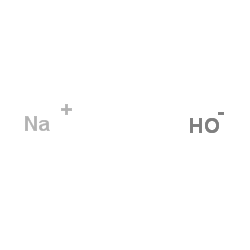
81133-20-2 / sodium hydroxide
Basic Information
CAS
81133-20-2
Multi CAS
Yes
Molecular Formula
HNAO
Molecular Weight
39.997000
Exact Mass
39.992509
InChI
InChI=1S/Na.H2O/h;1H2/q+1;/p-1
InChIKey
HEMHJVSKTPXQMS-UHFFFAOYSA-M
Physical Properties
Melting Point
604 °F (USCG, 1999)
323 °C
318 °C
605 °F
Boiling Point
greater than 266 °F at 760 mmHg (USCG, 1999)
Very high (USCG, 1999)
1388 °C
2534 °F
Density
1.5 at 68 °F (USCG, 1999) - Denser than water; will sink
2.13 at 68 °F (USCG, 1999) - Denser than water; will sink
2.13 g/cu cm 25 °C
70-73 % solution: MP 62 °C; Density = 2.0 at 15.5 °C
2.1 g/cm³
Physical Description
Sodium hydroxide solution appears as a colorless liquid. More dense than water. Contact may severely irritate skin, eyes, and mucous membranes. Toxic by ingestion. Corrosive to metals and tissue.
Sodium hydroxide, solid appears as a white solid. Corrosive to metals and tissue. Used in chemical manufacturing, petroleum refining, cleaning compounds, drain cleaners.
Water or Solvent Wet Solid; Dry Powder; Liquid; Liquid, Other Solid; Other Solid; Pellets or Large Crystals, Liquid, Other Solid; NKRA; Pellets or Large Crystals; Pellets or Large Crystals, Liquid; Dry Powder, Pellets or Large Crystals; Dry Powder, Liquid
White or nearly white pellets, flakes, sticks, fused masses or other forms. Solutions are clear or slightly turbid, colourless or slightly coloured, strongly caustic and hygroscopic and when exposed to the air they absorb carbon dioxide, forming sodium carbonate
Colorless to white, odorless solid (flakes, beads, granular form); [NIOSH] Deliquescent; [CHEMINFO]
Appearance
White, orthogonal crystals
Colorless to white ... solid (flakes, beads, granular form).
Brittle, white, translucent crystalline solid
State
Liquid
Computed Properties
Structural Parameters
Heavy atom count
2
H-bond acceptors
1
H-bond donors
1
Molar refractivity
1.94
TPSA
30
LogP / Solubility
WLOGP
-3.17
MLOGP
-2.81
XLogP3
-3.17
Consensus LogP
-3.05
Log S (ESOL)
1.91
Class (ESOL)
Highly soluble
Log S (Ali)
2.4
Class (Ali)
Highly soluble
Log S (SILICOS-IT)
2.71
Class (SILICOS-IT)
Highly soluble
ADME
GI absorption
Low
BBB permeant
No
P-gp substrate
No
CYP1A2 inhibitor
No
CYP2C19 inhibitor
No
CYP2C9 inhibitor
No
CYP2D6 inhibitor
No
CYP3A4 inhibitor
No
Log Kp (skin permeation)
-5.22
Drug-likeness / Medicinal Chemistry
Lipinski
Yes
Ghose
No
Veber
Yes
Egan
Yes
Muegge
No
Bioavailability score
0.55
Leadlikeness
No
Synthetic Accessibility
1
Customers Also Viewed
-

-
-
-
-
-
Cupric oxide wire, Φ:0.5mm, suitable for elemental analyzer
- CAS RN: 1317-38-0
- Product Code: SSC-038833