CAS RN: 276863-95-7
3-(4-Chloro-1-oxobutyl)indole-5-carbonitrile
- Product code: SSC-127905
Historical Factory Record
Historical Supply Reference
This product has historical factory records. Recorded pack sizes and purity can be used as a supply reference, while project-specific availability is confirmed by inquiry.
- Pack sizes on record: 1g
- Available purity: ≥95%
- Inventory rows with stock: 0
- Bulk packaging: confirmed by inquiry
Reference Pack Sizes
Reference pack sizes are shown below. Final availability, packaging and delivery schedule are confirmed by inquiry.
| Pack Size | Recorded Purity | Available Qty | Ship From | Inquiry |
|---|---|---|---|---|
| 1g | ≥95% | 0 Out of Stock | Shenzhen | Inquiry |
276863-95-7 / methanol
Basic Information
CAS
276863-95-7
Multi CAS
Yes
Molecular Formula
CH4O
Molecular Weight
32.042000
Exact Mass
32.026215
InChI
InChI=1S/C13H11ClN2O/c14-5-1-2-13(17)11-8-16-12-4-3-9(7-15)6-10(11)12/h3-4,6,8,16H,1-2,5H2
InChIKey
DFORIOBMTPKWPE-UHFFFAOYSA-N
Physical Properties
Melting Point
-144 °F (NTP, 1992)
-97.8 °C
-97.6 °C
-98 °C
-144 °F
Boiling Point
148.3 °F at 760 mmHg (NTP, 1992)
64.7 °C at 760 mm Hg
64.00 to 65.00 °C. @ 760.00 mm Hg
65 °C
147 °F
Density
0.792 at 68 °F (USCG, 1999) - Less dense than water; will float
0.8100 at 0 °C/4 °C; 0.7866 at 25 °C/4 °C
Relative density (water = 1): 0.79
0.79
Physical Description
Methanol appears as a colorless fairly volatile liquid with a faintly sweet pungent odor like that of ethyl alcohol. Completely mixes with water. The vapors are slightly heavier than air and may travel some distance to a source of ignition and flash back. Any accumulation of vapors in confined spaces, such as buildings or sewers, may explode if ignited. Used to make chemicals, to remove water from automotive and aviation fuels, as a solvent for paints and plastics, and as an ingredient in a wide variety of products.
Methanol, tallow alkyl iminobisethanol appears as a yellow-colored liquid with an "alcohol" odor. Less dense than water. Vapors heavier than air. Corrosive. Contact may severely irritate skin, eyes and mucous membranes. May be toxic by ingestion, inhalation and skin absorption. Used to make other chemicals.
Liquid; Dry Powder, Liquid; Pellets or Large Crystals
Colorless liquid with a characteristic pungent odor; [NIOSH]
Liquid
Appearance
Colorless liquid
Clear, colorless liquid
State
Liquid
Computed Properties
Structural Parameters
Heavy atom count
2
Fraction Csp3
1
H-bond acceptors
1
H-bond donors
1
Molar refractivity
8.14
TPSA
20.23
LogP / Solubility
WLOGP
-0.39
MLOGP
-0.36
XLogP3
-0.5
Consensus LogP
-0.42
Log S (ESOL)
0.21
Class (ESOL)
Highly soluble
Log S (Ali)
0.46
Class (Ali)
Highly soluble
Log S (SILICOS-IT)
0.46
Class (SILICOS-IT)
Highly soluble
ADME
GI absorption
High
BBB permeant
Yes
P-gp substrate
No
CYP1A2 inhibitor
No
CYP2C19 inhibitor
No
CYP2C9 inhibitor
No
CYP2D6 inhibitor
No
CYP3A4 inhibitor
No
Log Kp (skin permeation)
-3.19
Drug-likeness / Medicinal Chemistry
Lipinski
Yes
Ghose
No
Veber
Yes
Egan
Yes
Muegge
No
Bioavailability score
0.55
Leadlikeness
No
Synthetic Accessibility
1
Customers Also Viewed
-

3-(4-Chlorophenyl)-N-((4-chlorophenyl)sulfonyl)-N’-methyl-4-phenyl-4,5-dihydro-1H-pyrazole-1-carboximidamide
- CAS RN: 362519-49-1
- Product Code: LINC899794
-
-
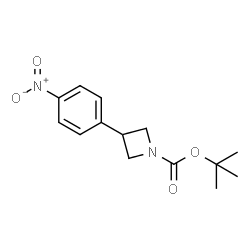
tert-Butyl 3-(4-nitrophenyl)azetidine-1-carboxylate
- CAS RN: 883901-62-0
- Product Code: SSC-199003
-
-
3-[(1R)-1-(2,6-dichloro-3-fluorophenyl)ethoxy]-5-[1-(4-piperidinyl)-1H-pyrazol-4-yl]-2-Pyridinamine
- CAS RN: 877399-52-5
- Product Code: LINR823899
-
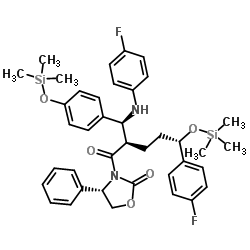
(S)-3-((2R,5S)-5-(4-Fluorophenyl)-2-((S)-((4-fluorophenyl)amino)(4-((trimethylsilyl)oxy)phenyl)methyl)-5-((trimethylsilyl)oxy)pentanoyl)-4-phenyloxazolidin-2-one
- CAS RN: 272778-12-8
- Product Code: LINS890413



![CAS 877399-52-5 3-[(1R)-1-(2,6-dichloro-3-fluorophenyl)ethoxy]-5-[1-(4-piperidinyl)-1H-pyrazol-4-yl]-2-Pyridinamine molecular structure](https://starshinechemical.com/wp-content/uploads/2022/03/44531200.gif)