CAS RN: 18282-10-5
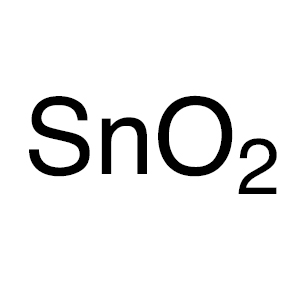
Tin(IV) Oxide
Product Availability
Choose a grade to view its available package options.
17 package records16 with current stock9 grade groups
| Batch No. | Package | Availability | Warehouse | Lead Time | Inquiry |
|---|---|---|---|---|---|
| Batchno.20250102 | 5ml / 25ml | Confirm by inquiry | Shanghai | Inquiry |
| Batch No. | Package | Availability | Warehouse | Lead Time | Inquiry |
|---|---|---|---|---|---|
| Batchno.20260201 | 25g / 100g | Confirm by inquiry | Shanghai | Inquiry |
| Batch No. | Package | Availability | Warehouse | Lead Time | Inquiry |
|---|---|---|---|---|---|
| Batchno.20250624 | 5g / 25g / 100g | Confirm by inquiry | Shanghai, Guangdong, Hebei | Inquiry |
| Batch No. | Package | Availability | Warehouse | Lead Time | Inquiry |
|---|---|---|---|---|---|
| Batchno.20260628 | 100g | In stock | Shanghai, Shenzhen, Tianjin, Wuhan, Chengdu | Inquiry | |
| Batchno.20250128 | 1kg | In stock | Shanghai | Inquiry | |
| Batchno.20250603 | 25g | In stock | Shanghai, Shenzhen, Tianjin, Wuhan, Chengdu | Inquiry | |
| Batchno.20250615 | 500g | In stock | Shanghai, Shenzhen | Inquiry |
| Batch No. | Package | Availability | Warehouse | Lead Time | Inquiry |
|---|---|---|---|---|---|
| Batchno.20250526 | 1g | Out of stock | 8-10 business days | Inquiry |
| Batch No. | Package | Availability | Warehouse | Lead Time | Inquiry |
|---|---|---|---|---|---|
| Batchno.20251210 | 25g / 100g / 500g / 2.5kg | Confirm by inquiry | Shanghai, Shandong, Guangdong, Chongqing, Hebei | Inquiry |
- Product code: SSC-084625
Historical Factory Record
Historical Supply Reference
This product has historical factory records. Recorded pack sizes and purity can be used as a supply reference, while project-specific availability is confirmed by inquiry.
- Pack sizes on record: 500g
- Available purity: ≥97%
- Inventory rows with stock: 0
- Bulk packaging: confirmed by inquiry
Reference Pack Sizes
Reference pack sizes are shown below. Final availability, packaging and delivery schedule are confirmed by inquiry.
| Pack Size | Recorded Purity | Available Qty | Ship From | Inquiry |
|---|---|---|---|---|
| 500g | ≥97% | 0 Out of Stock | Beijing | Inquiry |
18282-10-5 / bis(oxygen(2-));tin(4+)
Basic Information
CAS
18282-10-5
Multi CAS
No
Molecular Formula
O2Sn
Molecular Weight
150.710000
Exact Mass
151.892032
SMILES
[O-2].[O-2].[Sn+4]
InChI
InChI=1S/2O.Sn
InChIKey
XOLBLPGZBRYERU-UHFFFAOYSA-N
Physical Properties
Melting Point
2966 °F (Decomposes) (NIOSH, 2024)
1630 °C
2966 °F (Decomposes)
Boiling Point
Decomposes (NIOSH, 2024)
Decomposes
Density
6.95 (NIOSH, 2024) - Denser than water; will sink
6.95 g/cu cm
6.95 g/cm³
6.95
Physical Description
Tin(iv) oxide appears as white or off-white crystalline solid or powder. mp: 1127 °C, Sublimes: 1800-1900 °C, density: 6.95 g/cm3 Insoluble in water. Soluble in concentrated sulfuric acid, hydrochloric acid. Occurs in nature as the mineral cassiterite. Used as a catalyst, in putty, as a polishing powder for steel and glass, in ceramic glazes and colors. "Flowers of tin" refers to the material collected as the result of condensation after sublimation.
Dry Powder; Other Solid
White or slightly gray solid; [Merck Index] Pale cream to gray odorless powder;
WHITE OR SLIGHTLY GREY POWDER.
White or slightly gray powder.
Appearance
White, tetrahedral crystals
White or slightly gray powder.
State
Solid
Computed Properties
Structural Parameters
Heavy atom count
3
H-bond acceptors
2
Molar refractivity
7.13
TPSA
57
LogP / Solubility
WLOGP
-0.62
MLOGP
-0.55
XLogP3
-0.62
Consensus LogP
-0.6
Log S (ESOL)
-0.38
Class (ESOL)
Very soluble
Log S (Ali)
-0.35
Class (Ali)
Very soluble
Log S (SILICOS-IT)
-0.13
Class (SILICOS-IT)
Very soluble
ADME
GI absorption
Low
BBB permeant
Yes
P-gp substrate
No
CYP1A2 inhibitor
No
CYP2C19 inhibitor
No
CYP2C9 inhibitor
No
CYP2D6 inhibitor
No
CYP3A4 inhibitor
No
Log Kp (skin permeation)
-4.08
Drug-likeness / Medicinal Chemistry
Lipinski
Yes
Ghose
No
Veber
Yes
Egan
Yes
Muegge
No
Bioavailability score
0.55
Leadlikeness
No
Synthetic Accessibility
1
Safety & Transport
Pictogram(s)
Irritant
Health Hazard
Signal
Warning
Danger
GHS Hazard Statements
H335 (35.1%): May cause respiratory irritation [Warning Specific target organ toxicity, single exposure; Respiratory tract irritation]
H413 (17.3%): May cause long lasting harmful effects to aquatic life [Hazardous to the aquatic environment, long-term hazard]
H413 (31.4%): May cause long lasting harmful effects to aquatic life [Hazardous to the aquatic environment, long-term hazard]
H372: Causes damage to organs through prolonged or repeated exposure [Danger Specific target organ toxicity, repeated exposure]
Precautionary Statement Codes
P261, P271, P273, P304+P340, P319, P403+P233, P405, and P501
P273, and P501
P260, P264, P270, P319, and P501