CAS RN: 1653-40-3
6-Methylheptan-1-ol
Product Availability
Choose a grade to view its available package options.
1 package records0 with current stock1 grade group
| Batch No. | Package | Availability | Lead Time | Inquiry |
|---|---|---|---|---|
| Batchno.20250531 | 250mg / 1g | Out of stock | 5-7 business days | Inquiry |
- Product code: LINM905615
1653-40-3 / 6-methylheptan-1-ol
Basic Information
CAS
1653-40-3
Multi CAS
No
Molecular Formula
C8H18O
Molecular Weight
130.230000
Exact Mass
130.135765
SMILES
CC(C)CCCCCO
InChI
InChI=1S/C8H18O/c1-8(2)6-4-3-5-7-9/h8-9H,3-7H2,1-2H3
InChIKey
BWDBEAQIHAEVLV-UHFFFAOYSA-N
Physical Properties
Melting Point
less than 212 °F (USCG, 1999)
-106 °C
Boiling Point
367 °F at 760 mmHg (USCG, 1999)
188 °C; 95.8 °C at 20 atm
367 °F
Density
0.832 at 68 °F (USCG, 1999) - Less dense than water; will float
0.8176 at 25 °C
Bulk density = 6.95 lb/gal
0.832
0.83
Physical Description
Isooctyl alcohol appears as a clear colorless liquid with a faint pleasant odor. Flash point 180 °F. Less dense than water and insoluble in water. Vapors are heavier than air. Used as a solvent, in the making of cutting and lubricating oils, in hydraulic fluids, and in the production of other chemicals.
Liquid
Clear, colorless liquid; [NIOSH]
Clear, colorless liquid with a faint, pleasant odor.
Clear, colorless liquid.
Appearance
Clear, colorless liquid.
State
Liquid
Computed Properties
Structural Parameters
Heavy atom count
9
Fraction Csp3
1
Rotatable bonds
5
H-bond acceptors
1
H-bond donors
1
Molar refractivity
40.39
TPSA
20.23
LogP / Solubility
WLOGP
2.2
MLOGP
1.92
XLogP3
2.8
Consensus LogP
2.31
Log S (ESOL)
-1.7
Class (ESOL)
Soluble
Log S (Ali)
-2.21
Class (Ali)
Moderately soluble
Log S (SILICOS-IT)
-2.93
Class (SILICOS-IT)
Moderately soluble
ADME
GI absorption
High
BBB permeant
Yes
P-gp substrate
No
CYP1A2 inhibitor
No
CYP2C19 inhibitor
No
CYP2C9 inhibitor
No
CYP2D6 inhibitor
No
CYP3A4 inhibitor
No
Log Kp (skin permeation)
-1.96
Drug-likeness / Medicinal Chemistry
Lipinski
Yes
Ghose
No
Veber
Yes
Egan
Yes
Muegge
No
Bioavailability score
0.55
Brenk alerts
1
Leadlikeness
No
Synthetic Accessibility
1.5
Safety & Transport
Pictogram(s)
Irritant
Environmental Hazard
Health Hazard
Signal
Warning
GHS Hazard Statements
H302 (66.8%): Harmful if swallowed [Warning Acute toxicity, oral]
H315 (67.5%): Causes skin irritation [Warning Skin corrosion/irritation]
H319 (65%): Causes serious eye irritation [Warning Serious eye damage/eye irritation]
H335 (27%): May cause respiratory irritation [Warning Specific target organ toxicity, single exposure; Respiratory tract irritation]
H336 (26.4%): May cause drowsiness or dizziness [Warning Specific target organ toxicity, single exposure; Narcotic effects]
Precautionary Statement Codes
P261, P264, P264+P265, P270, P271, P273, P280, P301+P317, P302+P352, P304+P340, P305+P351+P338, P319, P321, P330, P332+P317, P337+P317, P362+P364, P403+P233, P405, and P501
P273, P391, and P501
P210, P261, P264, P264+P265, P271, P280, P302+P352, P304+P340, P305+P351+P338, P319, P321, P332+P317, P337+P317, P362+P364, P370+P378, P403, P403+P233, P405, and P501
P210, P260, P261, P264, P264+P265, P270, P271, P273, P280, P301+P317, P302+P352, P304+P340, P305+P351+P338, P308+P316, P319, P321, P330, P332+P317, P337+P317, P362+P364, P370+P378, P403, P403+P233, P405, and P501
Customers Also Viewed
-

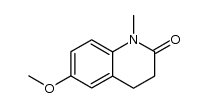
6-Methoxy-1-methyl-3,4-dihydroquinolin-2(1H)-one
- CAS RN: 187679-62-5
- Product Code: SSC-087229
-
-
-
-
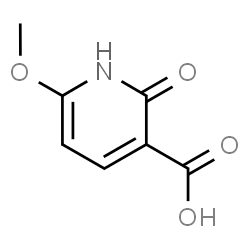
6-Methoxy-2-oxo-1,2-dihydropyridine-3-carboxylic acid
- CAS RN: 410090-04-9
- Product Code: SSC-149398
-