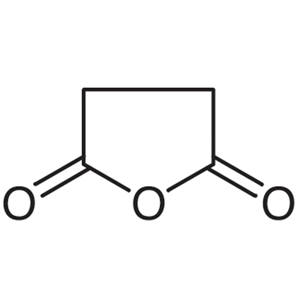
CAS RN: 108-30-5
Succinic Anhydride
Product Availability
Choose a grade to view its available package options.
1 package records1 with current stock1 grade group
| Batch No. | Package | Availability | Warehouse | Inquiry |
|---|---|---|---|---|
| Batchno.20250725 | 100g / 500g / 1kg / 5kg / 10kg | Confirm by inquiry | Shanghai, Shandong, Guangdong, Chongqing, Hebei | Inquiry |
- Product code: SSC-009283
Verified Factory Data
Supply Overview & Packaging Options
Packaging options, recorded purity, stock quantity and ship-from location below are generated from the current factory data table for this CAS.
- Pack sizes on record: 100g, 500g, 1000g
- Available purity: ≥98%
- Inventory rows with stock: 3
- Bulk packaging: confirmed by inquiry
Available Pack Sizes & Stock
Specific stock quantities are shown below. Price is not displayed online and is confirmed by inquiry.
108-30-5 / oxolane-2,5-dione
SUCCINIC ANHYDRIDE | oxolane-2,5-dione | Succinic acid anhydride
Basic Information
CAS
108-30-5
Multi CAS
Yes
Molecular Formula
C4H4O3
Molecular Weight
100.070000
Exact Mass
100.016044
SMILES
C1CC(=O)OC1=O
InChI
InChI=1S/C4H4O3/c5-3-1-2-4(6)7-3/h1-2H2
InChIKey
RINCXYDBBGOEEQ-UHFFFAOYSA-N
Synonyms
SUCCINIC ANHYDRIDE
oxolane-2,5-dione
Succinic acid anhydride
Succinyl oxide
Dihydro-2,5-furandione
Physical Properties
Melting Point
247.3 °F (NTP, 1992)
119.6 °C
119 °C
Boiling Point
502 °F at 760 mmHg (NTP, 1992)
261 °C at 760 mm Hg
261 °C
Density
1.234 at 68 °F (NTP, 1992) - Denser than water; will sink
1.503 (also given as 1.104 and 1.234)
Bulk density: 47.2 lb/cu ft
Relative density (water = 1): 1.503
Physical Description
Succinic anhydride appears as colorless needles or white crystalline solid. Melting point 237 °F. Sublimes at 239 °F at 5 mmHg pressure; and at 198 °F and 1 mmHg pressure. Moderately toxic and an irritant.
Dry Powder; Liquid; Pellets or Large Crystals
Colorless or light-colored solid; [Hawley] Odorless; [HSDB] White crystalline solid;
Solid
COLOURLESS CRYSTALS OR FLAKES.
Appearance
NEEDLES FROM ALC; RHOMBIC PYRAMIDS FROM CHLOROFORM OR CARBON TETRACHLORIDE
COLORLESS OR LIGHT-COLORED NEEDLES OR FLAKES
Orthorhombic prisms from abs alc.
Succinic anhydride forms rhombic pyramidal or bipyramidal crystals.
State
Solid
Storage Conditions
STORAGE PRECAUTIONS: You should store this material at ambient temperatures, and protect it from moisture. (NTP, 1992)
Computed Properties
Structural Parameters
Heavy atom count
7
Fraction Csp3
0.5
H-bond acceptors
3
Molar refractivity
20.33
TPSA
43.37
LogP / Solubility
WLOGP
-0.15
MLOGP
-0.14
XLogP3
-0.5
Consensus LogP
-0.26
Log S (ESOL)
-0.37
Class (ESOL)
Very soluble
Log S (Ali)
-0.27
Class (Ali)
Very soluble
Log S (SILICOS-IT)
-0.19
Class (SILICOS-IT)
Very soluble
ADME
GI absorption
High
BBB permeant
Yes
P-gp substrate
No
CYP1A2 inhibitor
No
CYP2C19 inhibitor
No
CYP2C9 inhibitor
No
CYP2D6 inhibitor
No
CYP3A4 inhibitor
No
Log Kp (skin permeation)
-3.44
Drug-likeness / Medicinal Chemistry
Lipinski
Yes
Ghose
No
Veber
Yes
Egan
Yes
Muegge
No
Bioavailability score
0.55
Brenk alerts
1
Leadlikeness
No
Synthetic Accessibility
1.5
Safety & Transport
Pictogram(s)
Corrosive
Irritant
Health Hazard
Signal
Danger
Warning
GHS Hazard Statements
H302: Harmful if swallowed [Warning Acute toxicity, oral]
H314: Causes severe skin burns and eye damage [Danger Skin corrosion/irritation]
H317: May cause an allergic skin reaction [Warning Sensitization, Skin]
H318: Causes serious eye damage [Danger Serious eye damage/eye irritation]
H334: May cause allergy or asthma symptoms or breathing difficulties if inhaled [Danger Sensitization, respiratory]
Precautionary Statement Codes
P233, P260, P261, P264, P264+P265, P270, P271, P272, P280, P284, P301+P317, P301+P330+P331, P302+P352, P302+P361+P354, P304+P340, P305+P354+P338, P316, P317, P321, P330, P333+P317, P342+P316, P362+P364, P363, P403, P405, and P501
P233, P260, P261, P264, P264+P265, P270, P271, P272, P280, P284, P301+P317, P301+P330+P331, P302+P352, P302+P361+P354, P304+P340, P305+P351+P338, P305+P354+P338, P316, P317, P319, P321, P330, P333+P317, P337+P317, P342+P316, P362+P364, P363, P403, P403+P233, P405, and P501
P261, P272, P273, P280, P302+P352, P321, P333+P317, P362+P364, and P501
P264, P264+P265, P270, P280, P301+P317, P305+P354+P338, P317, P330, and P501
P233, P260, P261, P264, P270, P271, P272, P280, P284, P301+P317, P301+P330+P331, P302+P352, P302+P361+P354, P304+P340, P305+P354+P338, P316, P321, P330, P333+P317, P342+P316, P362+P364, P363, P403, P405, and P501
Customers Also Viewed
-
![CAS 69-78-3 5,5′-Dithiobis(2-nitrobenzoic Acid) [for Determination of SH groups] molecular structure](data:image/svg+xml,%3Csvg%20xmlns='http://www.w3.org/2000/svg'%20viewBox='0%200%200%200'%3E%3C/svg%3E)
5,5′-Dithiobis(2-nitrobenzoic Acid) [for Determination of SH groups]
- CAS RN: 69-78-3
- Product Code: SSC-178627
-
-
-
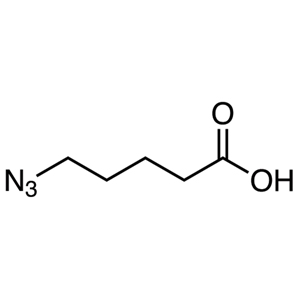
5-Azidovaleric Acid
- CAS RN: 79583-98-5
- Product Code: ICTA2729
- Purity/Analytical method: >98.0%(GC)(T)
-
-
![CAS 69-78-3 5,5′-Dithiobis(2-nitrobenzoic Acid) [for Determination of SH groups] molecular structure](https://starshinechemical.com/wp-content/uploads/2022/03/d0944-jpgcontextbwfzdgvyfhjvb3r8mza0ntf8aw1hz2uvanblz3xoyzevaguzlzg5mjk4mduwnzq0njivrda5ndquanbnfgy1otm1n2u1mdm2zdblnmnhntdjodmzzdq4ndy4y2yxotjlnwvjownmnti4nwq4ytnimzk5mdfkodnknjflnwy.jpeg)