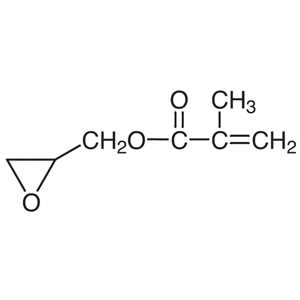
CAS RN: 106-91-2
Glycidyl Methacrylate (stabilized with MEHQ)
Product Availability
Choose a grade to view its available package options.
5 package records5 with current stock2 grade groups
| Batch No. | Package | Availability | Warehouse | Inquiry |
|---|---|---|---|---|
| Batchno.20260227 | 100g | In stock | Shanghai, Shenzhen, Tianjin, Wuhan, Chengdu | Inquiry |
| Batchno.20250903 | 1kg | In stock | Shanghai, Shenzhen, Tianjin, Wuhan | Inquiry |
| Batchno.20250310 | 25g | In stock | Shanghai, Shenzhen, Tianjin | Inquiry |
| Batchno.20251017 | 500g | In stock | Shanghai, Shenzhen, Tianjin, Wuhan, Chengdu | Inquiry |
| Batch No. | Package | Availability | Warehouse | Inquiry |
|---|---|---|---|---|
| Batchno.20251118 | 5g | In stock | Shanghai, Chongqing | Inquiry |
- Product code: SSC-007664
Verified Factory Data
Supply Overview & Packaging Options
Packaging options, recorded purity, stock quantity and ship-from location below are generated from the current factory data table for this CAS.
- Pack sizes on record: 25g, 100g, 500g
- Available purity: ≥97%
- Inventory rows with stock: 3
- Bulk packaging: confirmed by inquiry
Available Pack Sizes & Stock
Specific stock quantities are shown below. Price is not displayed online and is confirmed by inquiry.
106-91-2 / oxiran-2-ylmethyl 2-methylprop-2-enoate
GLYCIDYL METHACRYLATE | 2,3-Epoxypropyl methacrylate | Glycidol methacrylate
Basic Information
CAS
106-91-2
Multi CAS
Yes
Molecular Formula
C7H10O3
Molecular Weight
142.150000
Exact Mass
142.062994
SMILES
CC(=C)C(=O)OCC1CO1
InChI
InChI=1S/C7H10O3/c1-5(2)7(8)10-4-6-3-9-6/h6H,1,3-4H2,2H3
InChIKey
VOZRXNHHFUQHIL-UHFFFAOYSA-N
Synonyms
GLYCIDYL METHACRYLATE
2,3-Epoxypropyl methacrylate
Glycidol methacrylate
SY-Monomer G
Blemmer G
Physical Properties
Melting Point
freezing pt: -41.5 °C
Boiling Point
372 °F at 760 mmHg (NTP, 1992)
189 °C
Density
1.073 at 68 °F (USCG, 1999) - Denser than water; will sink
1.07 g/cu cm @ 25 °C
Relative density (water = 1): 1.08
Physical Description
Glycidyl methacrylate is a colorless liquid with a fruity odor. Floats on water. (USCG, 1999)
Liquid
Colorless liquid with a fruity odor; [HSDB]
COLOURLESS LIQUID WITH CHARACTERISTIC ODOUR.
Appearance
Colorless liquid
State
Liquid
Storage Conditions
STORAGE PRECAUTIONS: You should store this material in a refrigerator. (NTP, 1992)
Store only if stabilized. Cool. Well closed. Keep in the dark. Separated from strong oxidants, strong bases and strong acids. Separated from food and feedstuffs. Store in an area without drain or sewer access. Provision to contain effluent from fire extinguishing.
Temp during storage must be kept low to minimize formation of peroxides and other oxidation products. ... Storage temp below 30 °C are recommended for the polyfunctional methacrylates. ... The methacrylate monomers should not be stored for longer than one year. Shorter storage times are recommended for the aminomethacrylates, ie, three months, and the polyfunctional methacrylates, ie, six months. Many of these cmpd are sensitive to UV light and should, therefore, be stored in the dark. The methacrylic esters may be stored in mild steel, stainless steel, or aluminum. /Methacrylic acid & derivatives/
Computed Properties
Structural Parameters
Heavy atom count
10
Fraction Csp3
0.57
Rotatable bonds
3
H-bond acceptors
3
Molar refractivity
35.51
TPSA
38.83
LogP / Solubility
WLOGP
0.5
MLOGP
0.44
XLogP3
0.8
Consensus LogP
0.58
Log S (ESOL)
-0.84
Class (ESOL)
Very soluble
Log S (Ali)
-1.09
Class (Ali)
Soluble
Log S (SILICOS-IT)
-1.36
Class (SILICOS-IT)
Soluble
ADME
GI absorption
High
BBB permeant
Yes
P-gp substrate
No
CYP1A2 inhibitor
No
CYP2C19 inhibitor
No
CYP2C9 inhibitor
No
CYP2D6 inhibitor
No
CYP3A4 inhibitor
No
Log Kp (skin permeation)
-3.23
Drug-likeness / Medicinal Chemistry
Lipinski
Yes
Ghose
No
Veber
Yes
Egan
Yes
Muegge
No
Bioavailability score
0.55
Brenk alerts
1
Leadlikeness
No
Synthetic Accessibility
2
Safety & Transport
Pictogram(s)
Corrosive
Acute Toxic
Health Hazard
Irritant
Signal
Danger
GHS Hazard Statements
H302: Harmful if swallowed [Warning Acute toxicity, oral]
H311: Toxic in contact with skin [Danger Acute toxicity, dermal]
H314: Causes severe skin burns and eye damage [Danger Skin corrosion/irritation]
H317: May cause an allergic skin reaction [Warning Sensitization, Skin]
H318: Causes serious eye damage [Danger Serious eye damage/eye irritation]
Precautionary Statement Codes
P203, P260, P261, P262, P264, P264+P265, P270, P271, P272, P280, P301+P317, P301+P330+P331, P302+P352, P302+P361+P354, P304+P340, P305+P354+P338, P316, P317, P318, P319, P321, P330, P333+P317, P361+P364, P362+P364, P363, P403+P233, P405, and P501
P203, P260, P261, P262, P264, P264+P265, P270, P271, P272, P280, P301+P317, P301+P330+P331, P302+P352, P302+P361+P354, P304+P340, P305+P351+P338, P305+P354+P338, P308+P316, P316, P317, P318, P319, P321, P330, P332+P317, P333+P317, P337+P317, P361+P364, P362+P364, P363, P403+P233, P405, and P501
P203, P210, P260, P261, P262, P264, P264+P265, P270, P272, P273, P280, P301+P317, P301+P330+P331, P302+P352, P302+P361+P354, P304+P340, P305+P354+P338, P308+P316, P316, P317, P318, P319, P321, P330, P333+P317, P361+P364, P362+P364, P363, P370+P378, P403, P405, and P501
P203, P210, P260, P261, P262, P264, P264+P265, P270, P272, P280, P301+P317, P301+P330+P331, P302+P352, P302+P361+P354, P304+P340, P305+P354+P338, P308+P316, P316, P317, P318, P319, P321, P330, P333+P317, P361+P364, P362+P364, P363, P370+P378, P403, P405, and P501
P203, P260, P261, P262, P264, P270, P271, P272, P280, P301+P317, P301+P330+P331, P302+P352, P302+P361+P354, P304+P340, P305+P354+P338, P316, P318, P319, P321, P330, P333+P317, P361+P364, P362+P364, P363, P403+P233, P405, and P501
Hazard Class/Division
6.1
Packing Group
III
Customers Also Viewed
-

-
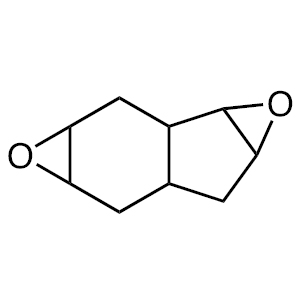
1,2:5,6-Diepoxyhexahydroindan (mixture of isomers)
- CAS RN: 2886-89-7
- Product Code: SSC-130692
-
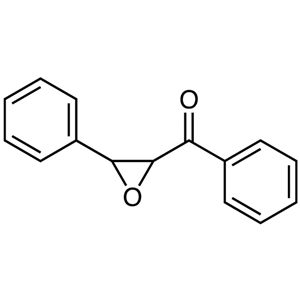
5,12-Dioxahexacyclo[7.6.1.02,8.04,6.010,15.011,13]hexadecane (mixture of isomers)
- CAS RN: 55553-81-6
- Product Code: SSC-163476
-
-
-
![CAS 55553-81-6 5,12-Dioxahexacyclo[7.6.1.02,8.04,6.010,15.011,13]hexadecane (mixture of isomers) molecular structure](https://starshinechemical.com/wp-content/uploads/2022/03/d5961-jpgcontextbwfzdgvyfhjvb3r8mty3otb8aw1hz2uvanblz3xoyzmvagmxlzkzmdu1mtm2odkxmtgvrdu5njeuanbnfgrhmge3mjdimzfkzwzjmmnknmi1mjg4ntvlzty4zwfjmdk4ndexm2jlywzmyzkxzmqyzjzkm2vjnza0ymrkyzm.jpeg)